I spend a lot of time with teams sketching out the community expectations and attitudes about an issue or an opportunity when designing public engagement programs. It’s a fascinating challenge. We have to really reflect on how the public will want to shape or influence a project, as well as understand the emotions that might be wrapped around the experience.
It allows us to build on the work we do to identify how interested the public might be, and what impact they hope to have. It feels a bit more human and less about “who holds the power”.
There are two(ish) questions I like to unpack:
- What expectations will the public have about influencing or shaping X?
- How might they feel about the project? Why do they feel that way?
Let’s say we’re about to consult on a playground renewal project. The community might have high expectations and the desire for a blank canvas on how the playground will look, feel, or function. Maybe they just want to select from options we’ve designed. They might bring optimism and excitement to the project or frustration and cynicism. Their past experiences will shape how they arrive and participate when they engage–this could be productive or a challenge.
I like to plot it out on a matrix. Y-axis (vertical) represents high to low expectations. X-axis (horizontal) represents angry to happy attitudes or feelings. Each dot can represent an individual, group, or organisation.
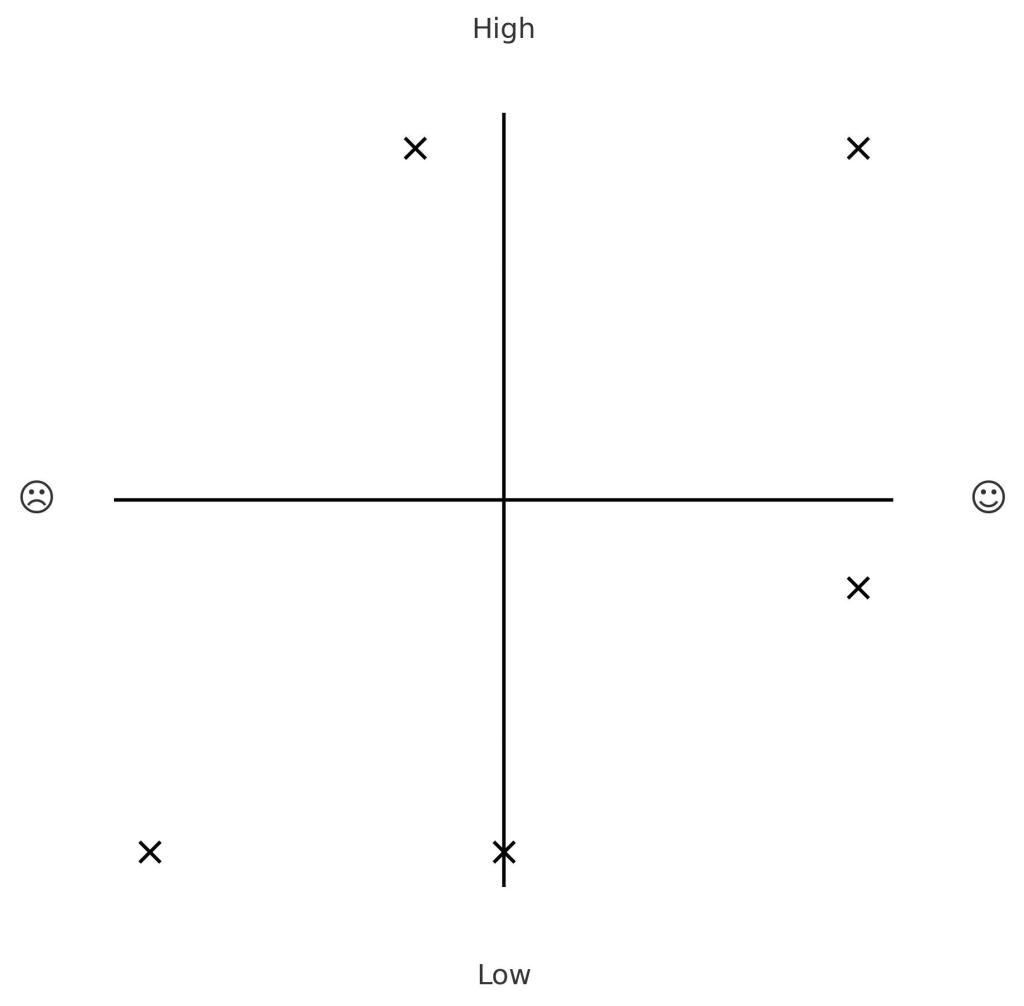
Once we’ve discussed and plotted out the expectations and attitudes of our stakeholders, we can start to paint a better picture of the engagement experience and unpack the following:
- What’s the appropriate level of engagement for this project? We might need to raise or lower this.
- How might the expectations and attitudes of the public correlate to their level of interest and impact on the project?
- What kinds of engagement activities/interactions can we design into the experience to soften the public’s negative feelings while being realistic with expectations? How could we elevate local champions?
I note that much of the discussion and planning at this stage is based on our assumptions and anecdotal experiences with the community when reflecting on past projects. Sometimes, the public might tell us explicitly in writing or in-person what they’re excited or suspicious about. It’s a good exercise to run through before, during, or after a phase of engagement.
I’ve found that conducting 1:1 or group conversations with key stakeholders through a “pre-engagement” process can be helpful. The conversations are a good way to stress test some of the assumptions we’ve made about the public’s expectations or attitudes before launching the official consultation program. Ultimately, my goal is to prepare a better engagement experience, adjust some of the approach, and conduct more confident conversations with the community.
 Citizen First