Every year I clock thousands of hours of conversations with people who live, work, or play in Fremantle. Each of those chats uncovers a mixture of feelings and expectations that shapes how I engage with the community. The feelings expressed by people can range from over-the-moon happiness to red-faced anger. The expectations that I have to navigate can be incredibly high or begrudgingly low.
How we feel and what we expect is wrapped around every right or wrong decision that gets made in a community. I’ve seen it in conversations about line markings for car parking bays; in email responses about the placement of a water tank in a reserve; in newspaper articles about the redevelopment of an entire precinct; and even in meetings about swimming pool lane etiquette. The list goes on.
It’s important to pay attention to these feelings and expectations when designing public engagement programs because they are helpful qualitative data points that allow you to prepare for how people will show up to engage. I like challenging the teams I work with to reflect on this layer alongside the usual “interest & impact” mapping we do together.
There are three questions I like to unpack:
- What expectations will the public have about influencing or shaping X?
- How might they feel about X?
- What happened to make them feel that way?
I like to plot it out on a matrix. Y-axis (vertical) represents high to low expectations. X-axis (horizontal) represents angry to happy feelings. Each plot point can represent an individual, group, or organisation.
For complex projects, I host a series of workshops with teams to map this out. In some instances, it’s just an informal conversation that’s noted. Either way, it helps achieve alignment and understanding amongst collaborators before we head out to engage the community.
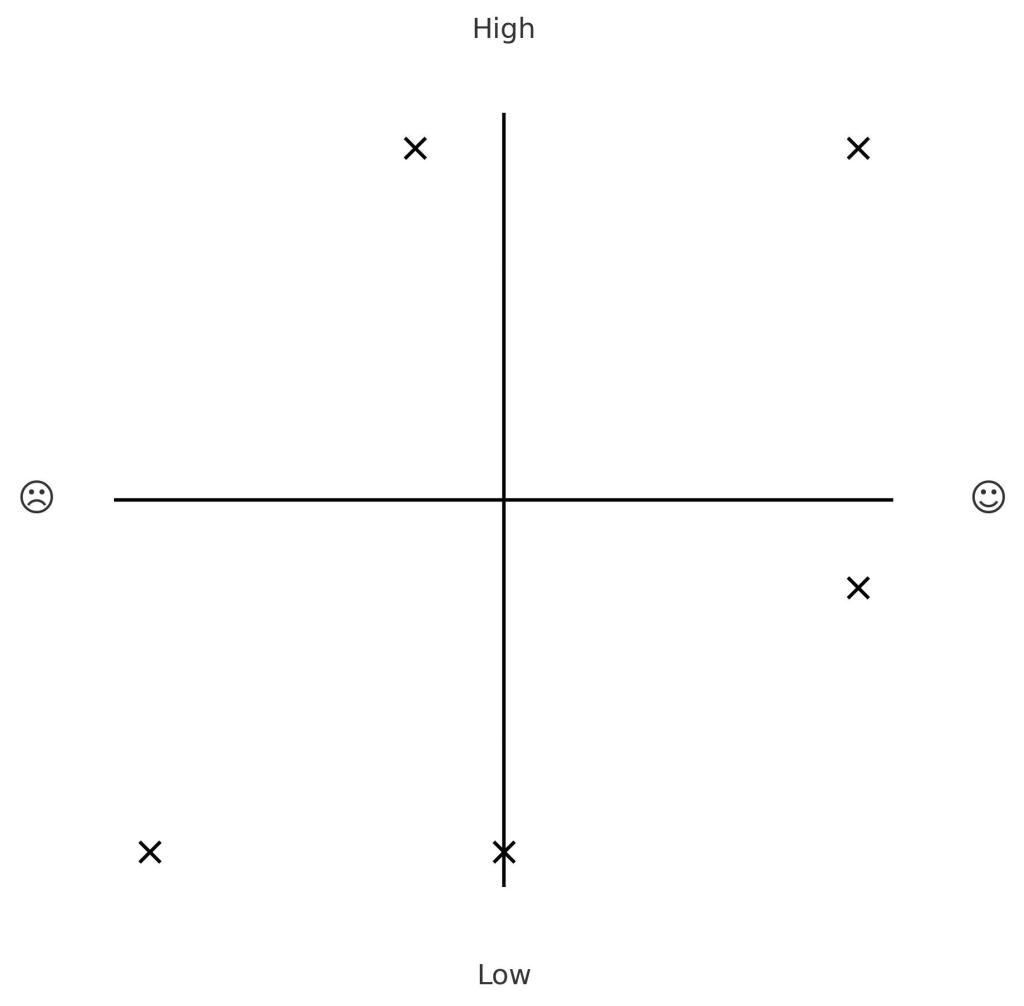
Once we’ve plotted the expectations and feelings, we then discuss what happened to make people feel that way.
For example, you will engage people who have high expectations coupled with anger because of the experiences they’ve had in the past when engaging on an issue or a topic. Maybe they expected to have a very high level of influence and decision-making capability (or they once enjoyed this prominence). Maybe they believe their fixed outcome is the only solution. Maybe they’ve been trying to attract attention to the topic for years (even decades) and are frustrated.
You might encounter people who have high expectations but are also highly optimistic–they want quality and greatness and might become champions to help you achieve what’s possible.
There are going to be people who will have low expectations and high hopes because they’ve never participated in civic engagement before, so they don’t really know what to expect and are eager to contribute. Low expectations and negative feelings might be the result of not believing anything will happen, so why bother now?
And yes, there are people who are optimistic, happy, and have realistic expectations. Hold these people really close!
This exercise helps us acknowledge the different feelings and expectations that will emerge during the engagement for a project or topic. I’m not always the closest person to the issue, so it also colours in some powerful context in my design process.
From here we can design an engagement experience that can result in confident and relevant conversations with each of those different attitudes. We explore how to soften the public’s negative feelings while being realistic with expectations. We home in on elevating champions in the community. We think through how marketing and promotional materials can educate and empower people to participate in productive ways.
Most importantly, we can design an approach that allows many voices to be heard and avoid having overly negative feelings or expectations dominate the conversation.
